Leo Fried
Quadball Under Extreme Scrutiny Today is an attempt to deeply and more thoroughly analyze player and team performance in a quadball series. In this article, I looked at the MLQ Championship Series between Austin and Boston. I went play-by-play, analyzing and grading what and how each player did on each play, and then I compiled those into grades for the series as a whole. The full description and explanation with all the math is here.
This is admittedly a somewhat subjective process — I am assigning play-by-play grades based on my read as to who was responsible for each play going right and wrong. It is also very much a work in progress and I am very open to and would love your feedback — there is a comments section at the bottom of the page. Individual players’ grades are just based on these two particular games and are not an indication of players’ general ability or talent level. This is not meant to put down players who didn’t play as well. The purpose of this endeavor is to learn about and better understand our sport and this series.
The full play-by-play chart is here, where I give individual player grades for each play of the series. Feel free to skip this entirely or just read a bit and then move on. Now, for the analysis.
So that number zero guy, huh?
Yeah, Johnson wins Finals MVP. 9 Goals and 5 assists across the two games, including 8(!) goals in the first one. At some point, it seemed like he was just doing it to prove that he could.
Here he is getting punched in the face and then recovering like it’s nothing and scoring from 7 yards.
Game 1 was full of this. Game 2 was a bit slower for him, but never the less:
Number zero is good. And young. But mostly good. Get him on the USNT.
Other Outlaw Heroes?
McBride was another standout, with 3 goals (plus a few others where she was open by hoops and never got a pass) including this 8-yard beauty she drilled through a tackle.
Even more than her offense though, McBride is the backbone of the Outlaws’ 1-3. She makes all the right rotations and covers her teammates’ missed ones, racking up both blocks and steals. Here she is stuffing Crawford at middle hoop.
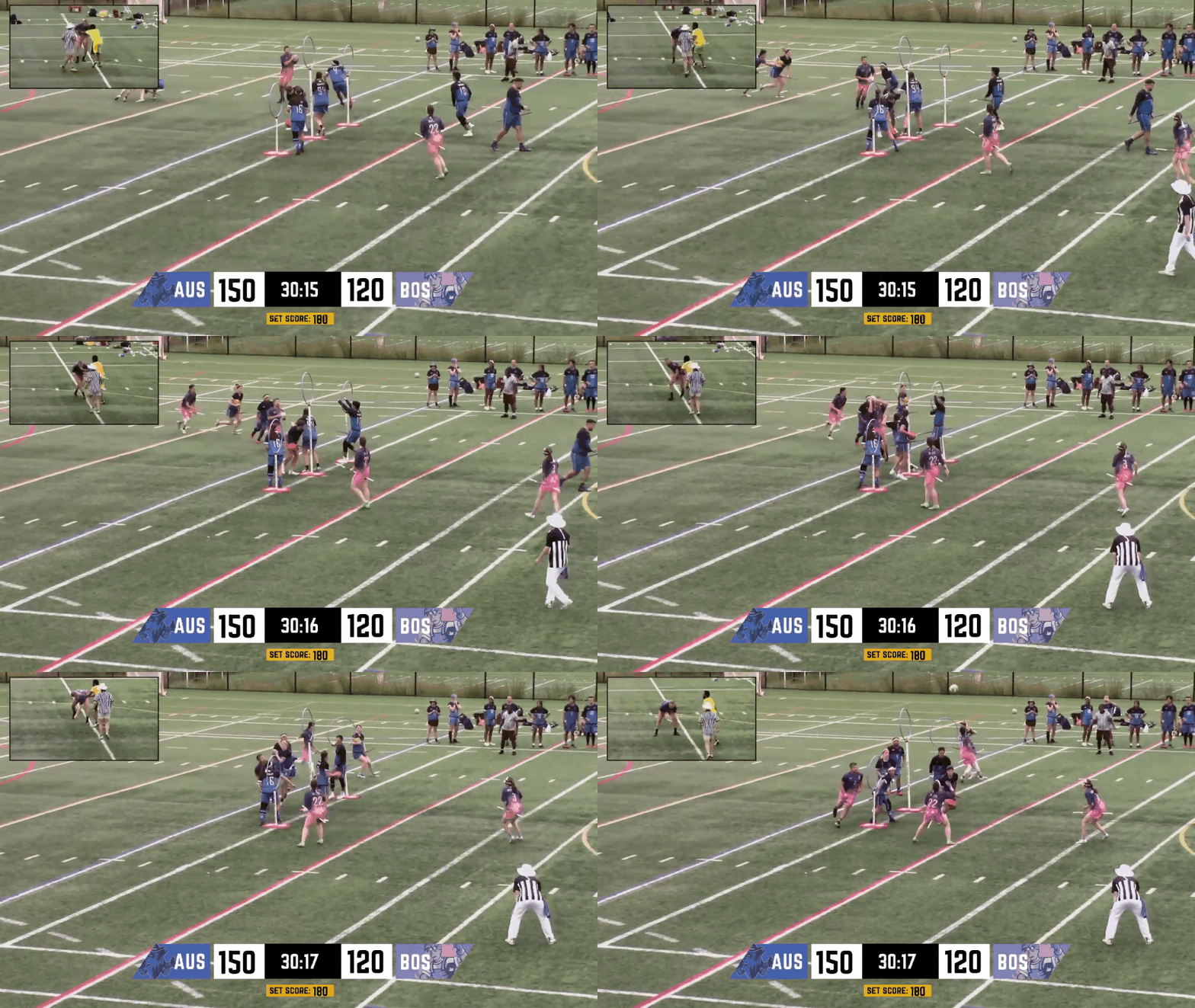
All of this is despite playing a superhuman number of minutes all weekend.
Who else?
Monroe was all over the field, as always. J. Andrews had 4 goals and a couple of key defensive hits. M. Ghoddossy was solid. Ga —
Did any Outlaw chasers not play well?
Uhh, not really. Chart:
| Name | Game 1 Grade | Game 2 Grade | Total Grade |
| A. Ghoddossy | -4 | 4 | 0 |
| Bevers | -1 | 3 | 2 |
| Galtelli | 1 | 4 | 5 |
| Garza | 3 | 3 | 6 |
| J. Andrews | 3 | 12 | 15 |
| Johnson | 29 | 5 | 34 |
| M. Ghoddossy | 3 | 2 | 5 |
| McBride | 12 | 15 | 27 |
| Monroe | 13 | 8 | 21 |
| Sialm | 0 | 0 | 0 |
| Total | 59 | 56 | 115 |
A player’s grade in a game (and across a series) is that player’s net impact, in points, on the game. So, for example, Monroe’s grade of 13 in game one means that his impact on that game was worth 13 points for the Outlaws. Negative numbers mean that player made more mistakes than good plays, and so their net contribution was negative.
29 in a single game, huh?
USNT.
And the rest of them!
Obviously, Johnson/McBride/Monroe balled out, but it wasn’t just them. The entire Outlaw chasing suite graded zero or better — this was not true of Forge. Up and down the roster, the Outlaw chasers were consistently making plays and limiting mistakes, which is key in a long series after two long days of quadball.
How about Boston?
Less good. Chart:
| Name | Game 1 Grade | Game 2 Grade | Total Grade |
| Crawford | 7 | 4 | 11 |
| Greenhouse | -5 | 6 | 1 |
| LaBudde | 1 | 0 | 1 |
| Lawrence | -3 | 1 | -2 |
| Manhardt | 0 | -1 | -1 |
| Mayor | -1 | -2 | -3 |
| McGarghan | -2 | 1 | -1 |
| Olazaba | 3 | 4 | 7 |
| Pfenning | 9 | -2 | 7 |
| Polen | -1 | -2 | -3 |
| Scura | 8 | 4 | 12 |
| Steinberg | -2 | -5 | -7 |
| Total | 14 | 8 | 22 |
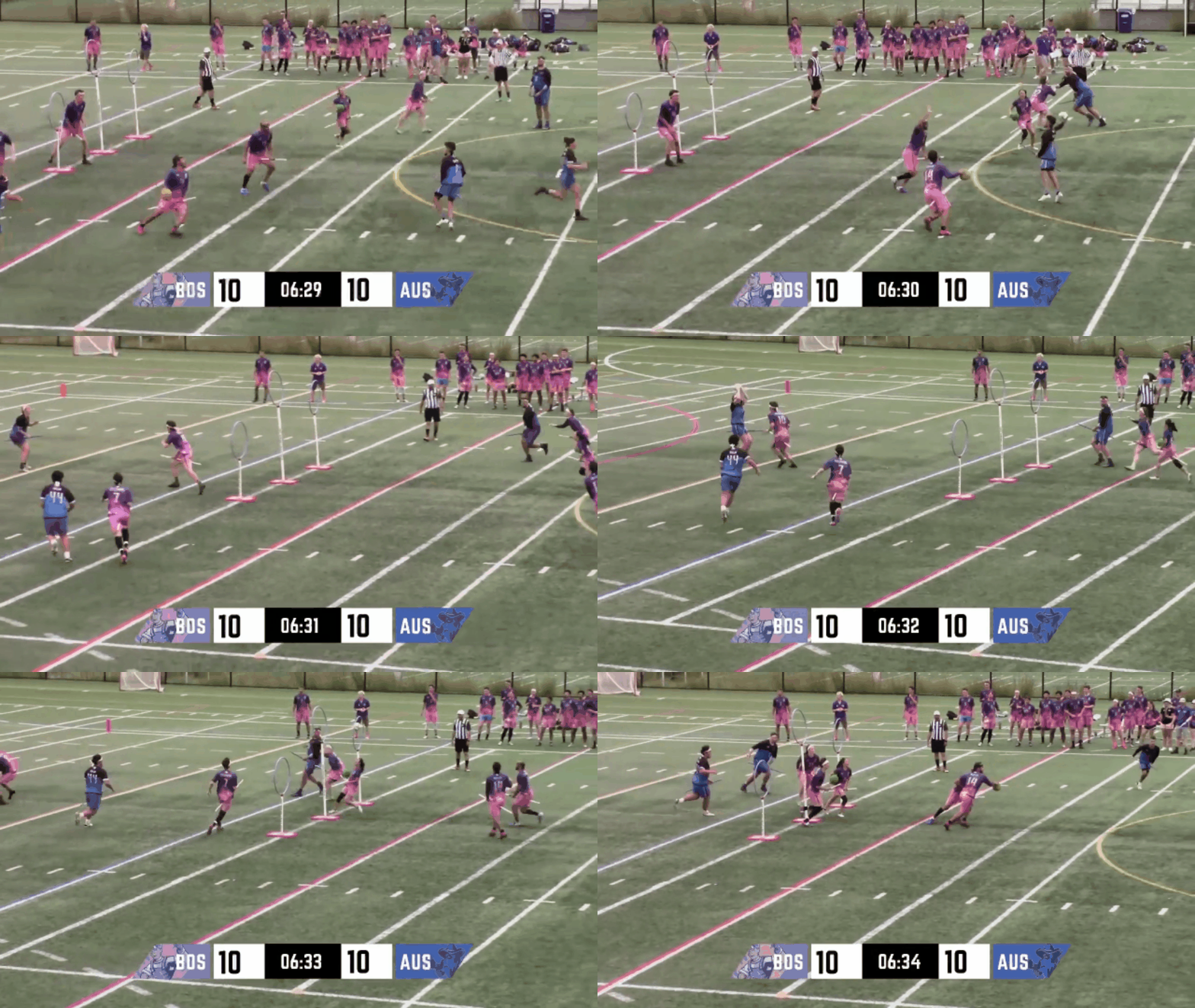
Kind of just a whole lot of meh. Crawford played really well in the minutes that he had. His defense is great, but I was most impressed by his offense and passing ability in particular. The transition pass to Steinberg is memorable, but that wasn’t the only great pass he had.

He also had a knack for extending Forge possessions. Boston’s best mechanism for killing a press (more on this later) was giving the ball to Crawford behind hoops and letting him rip one. If he scores, great, and if he misses, eh Scura’s probably out there somewhere anyway.
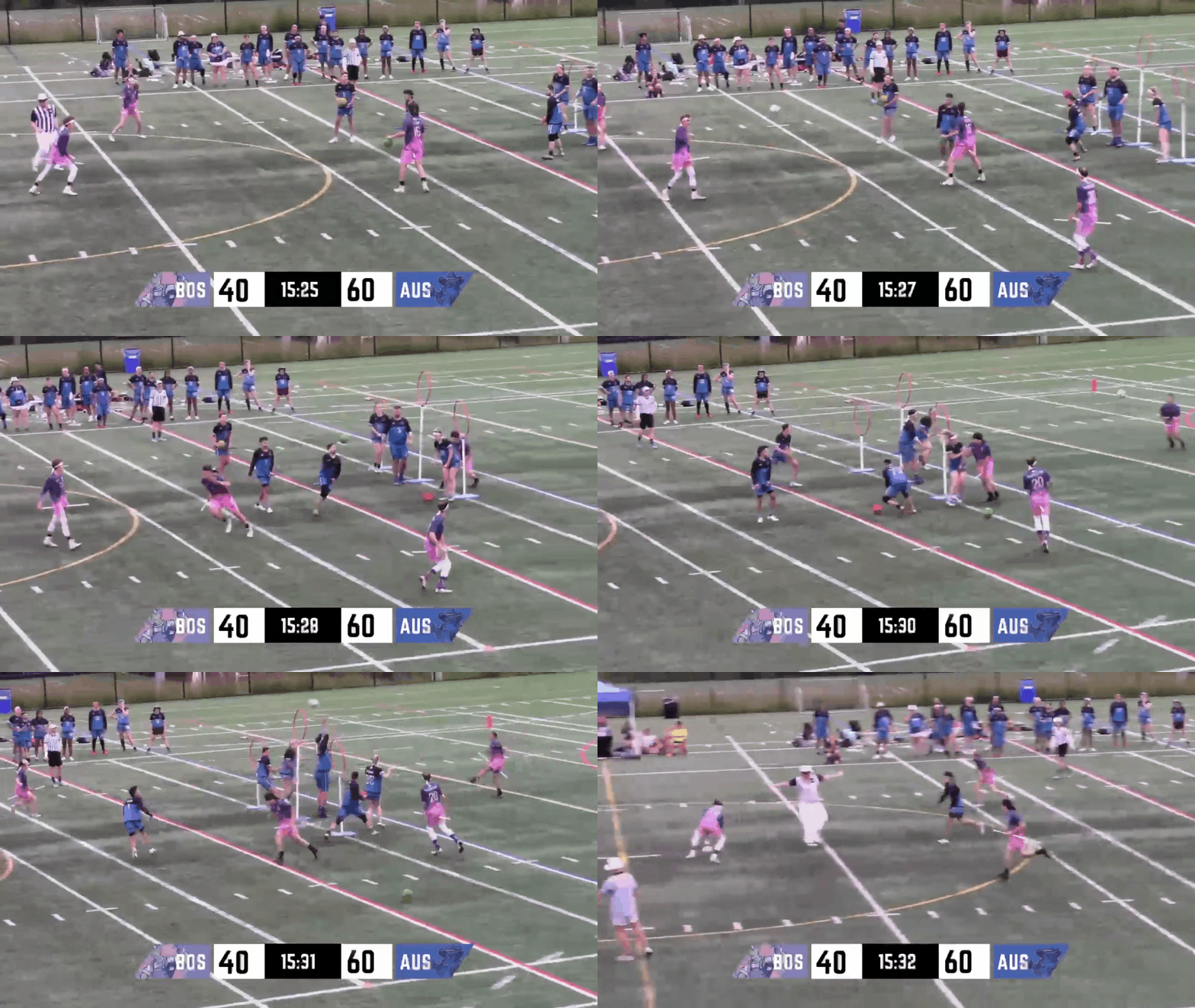
Eventually, Johnson read and jumped one of these, but it worked for most of the series.
Olazaba and Pfenning were both solid, on opposite sides of the ball. Pfenning had a few goals that consisted of him driving past two, three, or four Outlaw defenders and punching home a goal, while Olazaba was one Boston’s best defenders, especially during snitch-on-pitch. Olazaba also had Forge’s lone snitch catch of the series, although unfortunately QUEST doesn’t grade seekers.
The other player with a significant positive grade was Scura. Boston’s offense is clearly built around him: he is their point guard. Scura touches the quaffle on almost every possession he’s out there for, and he’s usually the one initiating the play. How did that go?
It varied. Scura was very good at converting against no bludgers and making it look pretty.
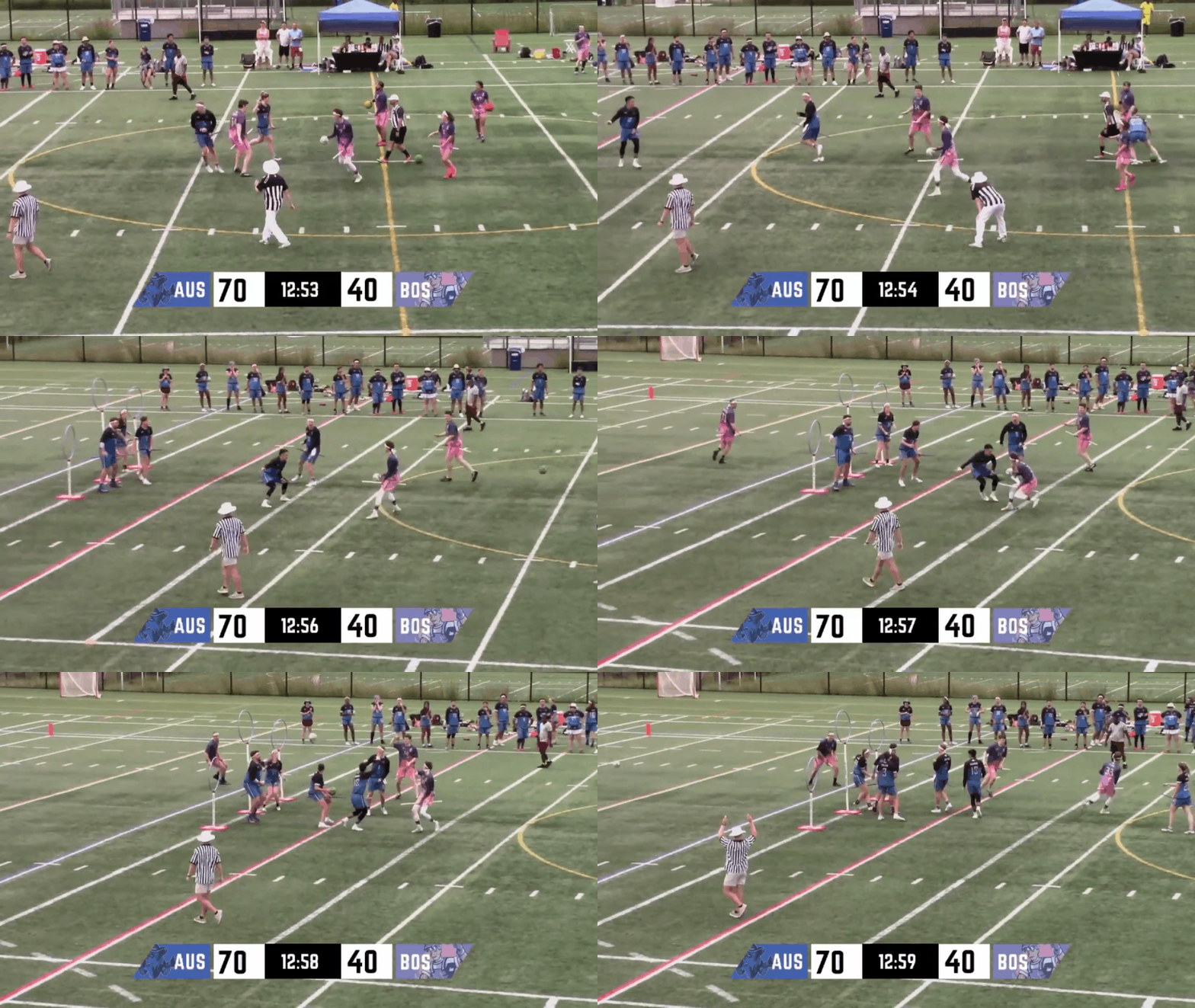
Steve Nash style:
Scura finished with 7 goals across the two games, almost all of them in transition or versus no bludgers.
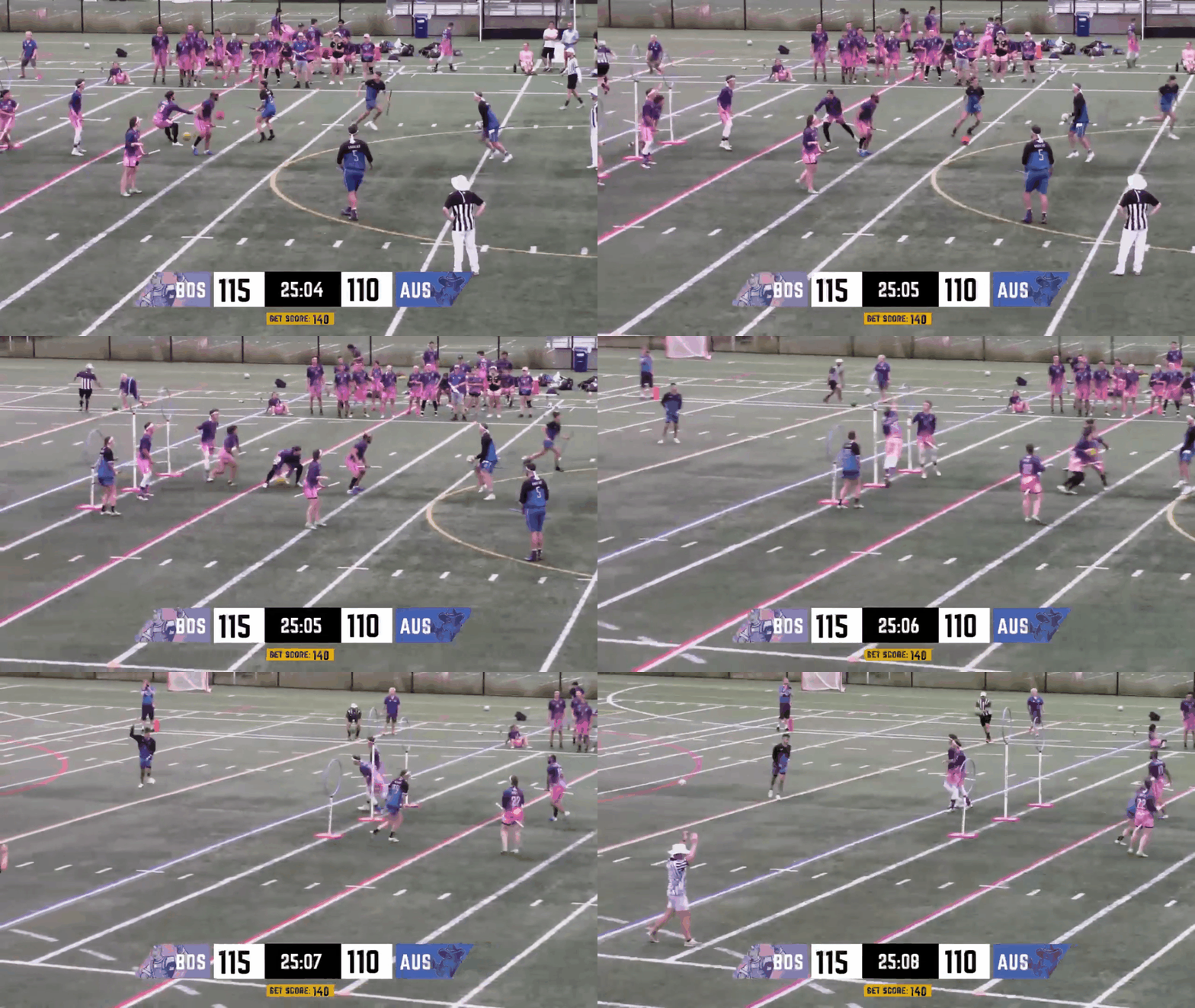
But the offense against bludgers back was less effective. Too many plays looked like this.
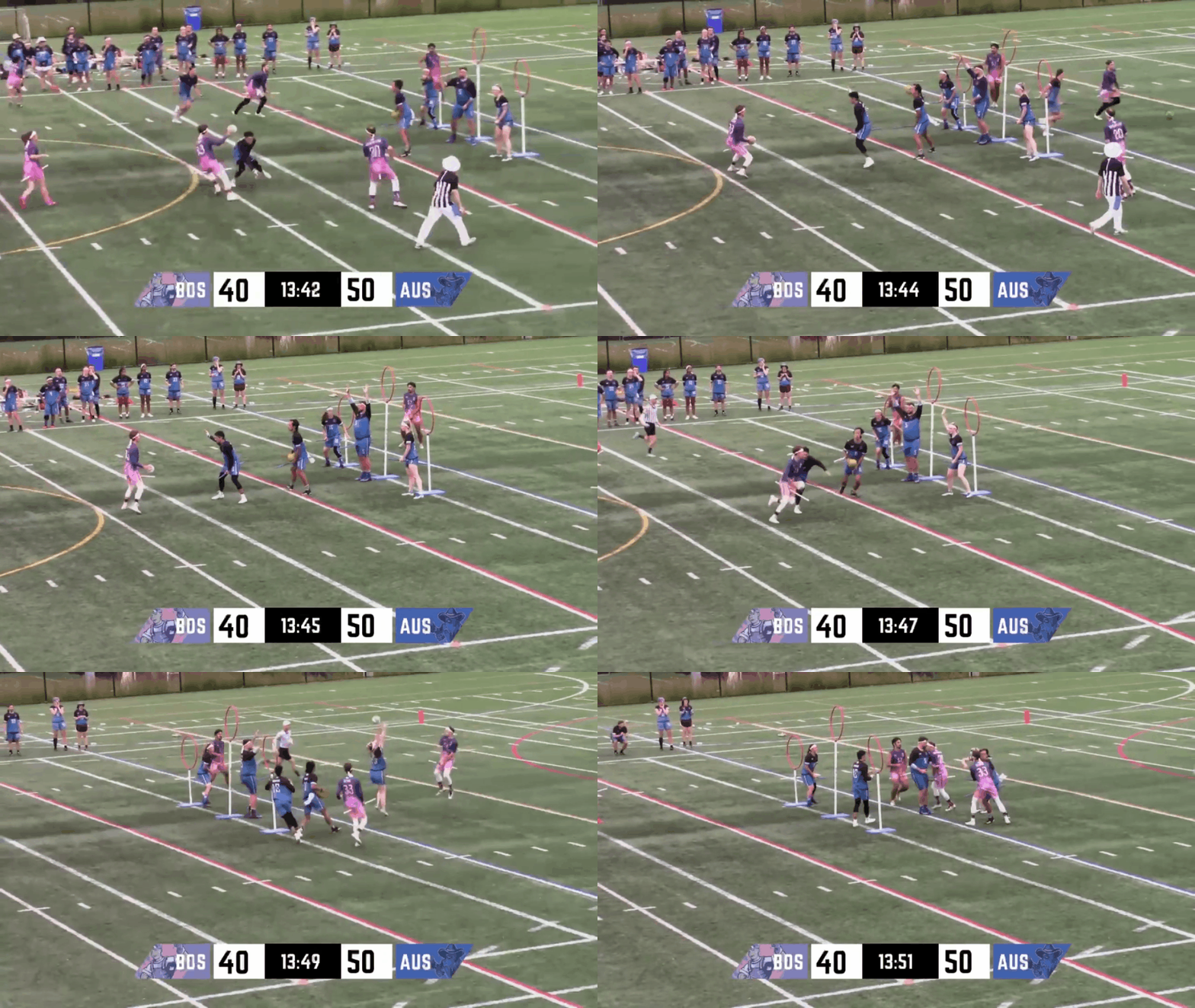
Scura tries to drive, is stymied by some combination of point defender and beaters, and flips the quaffle behind hoops, where the possession dies. I lost track of how many times this happened. I don’t know, this isn’t a horrible play, and the turnover’s certainly not all on Scura — McGarghan might have Olazaba open by small hoop, although maybe Wang just turn-beats him. But also, Collier is about to get bludger control! Let him get back in the play!
Is this really Scura’s fault though?
Yeah, only a little. Scura took a (-1) for each of these plays but between the transition goals and his hoop defending he still ended as Forge’s highest-graded quaffle player, so I don’t wanna be too hard on him.
So then what explains the 115 – 22 total grade?
Wow was it that bad?
…
Okay yeah, it was that bad. Individual performance is definitely a part of this: if Johnson switches teams then maybe this is a very different game. At the same time, the Outlaws just looked a lot better schematically than Forge did. The Boston chasers looked like they had never seen a 1-3 before, and even if they had, they didn’t have a plan to attack it.
Too many possessions went Scura -> behind hoops -> turnover. Boston tried to hammer exactly once, and Lawrence got sent to the box for it. They never had an off-ball chaser block the point keeper back to hoops, which they did against New York’s 1-3 a few weeks prior. There was no gameplan.
At the same time, one of the natural weaknesses of 1-3 is that it’s hard to press out of, but Boston helpfully fixed for the Outlaws that by not really having a press-break.
Part of this is on beaters, 100%. But also, take your reset! Spread out! Fling the quaffle toward Outlaw hoops! Anything but this!
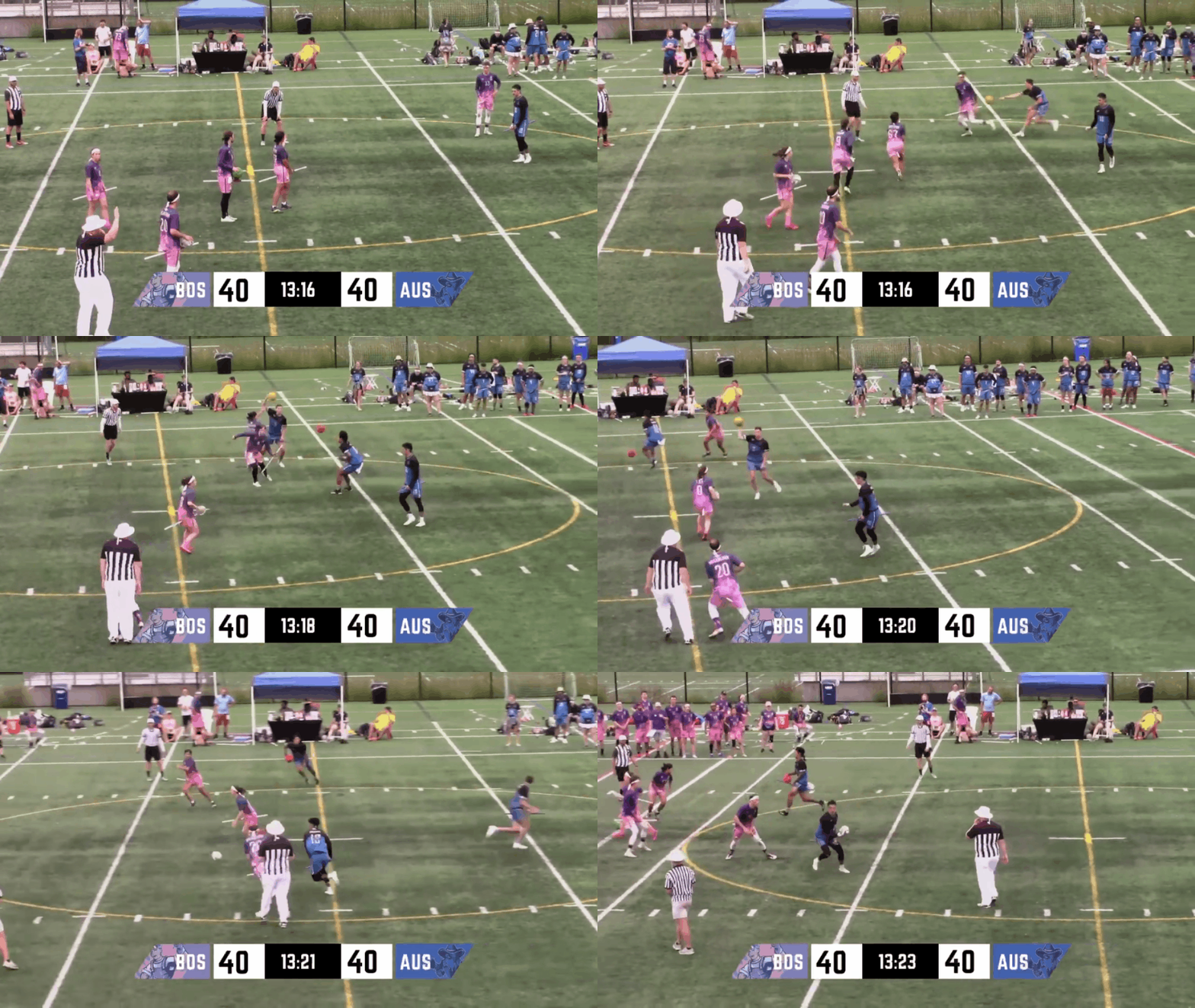
Again, it’s bad that your beaters lost, but your beaters are gonna lose sometimes. And when they do, you don’t have to score. But you can’t just hand your opponents a goal either.
All of this was especially painful when compared to the Forge press / Outlaw press-break. Austin chasers did an excellent job of buying time when their beaters lost and using their reset to keep possession of the quaffle.
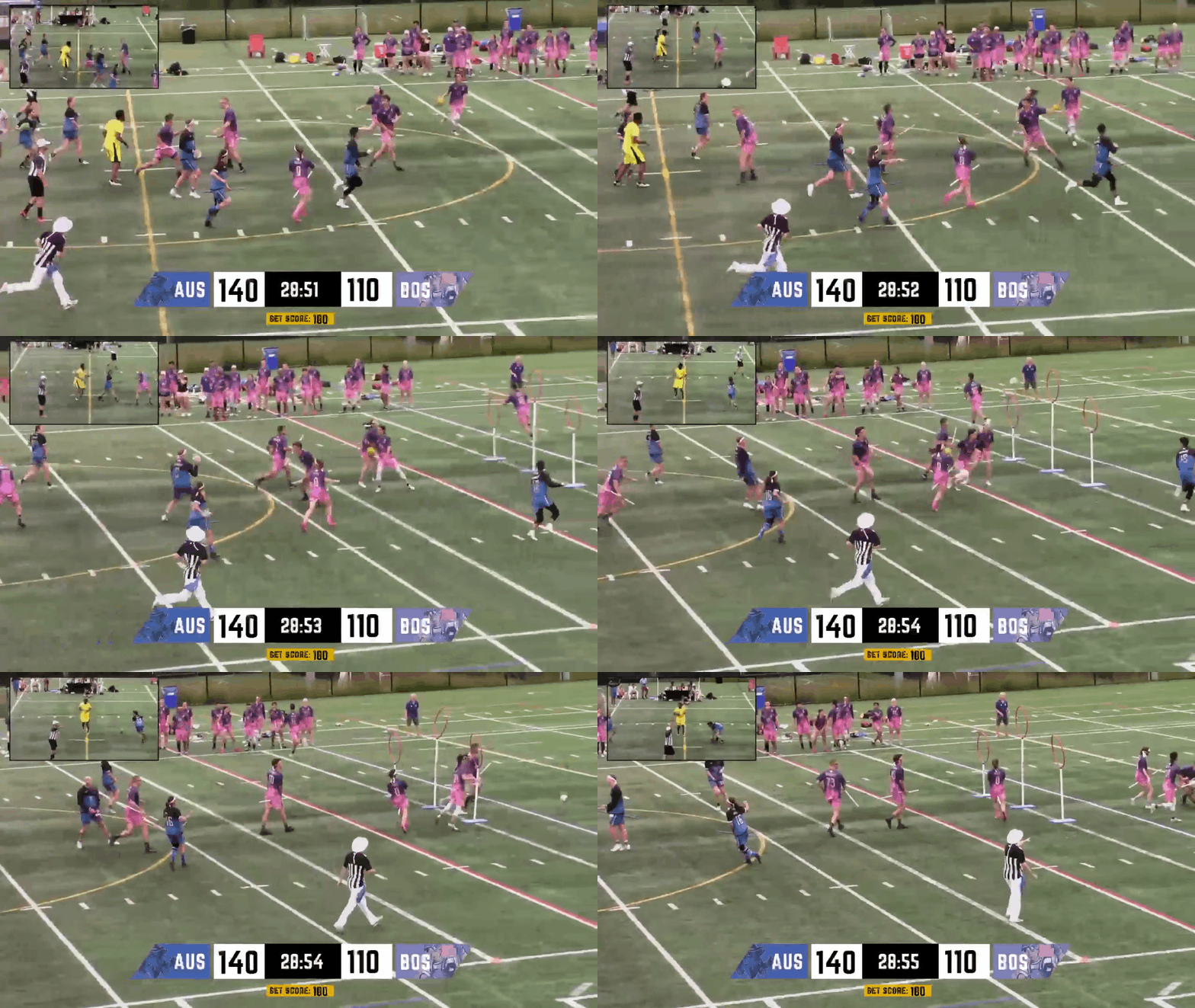
Monroe draws McCrady and then passes to Johnson, who draws Belitzky and does all but take a reset before passing to a cutting Galtelli. Galtelli finally takes the reset and then finds Monroe again while being pressured by McCrady. Press break complete. 10/10.
Here, Austin turns getting pressed into a goal:
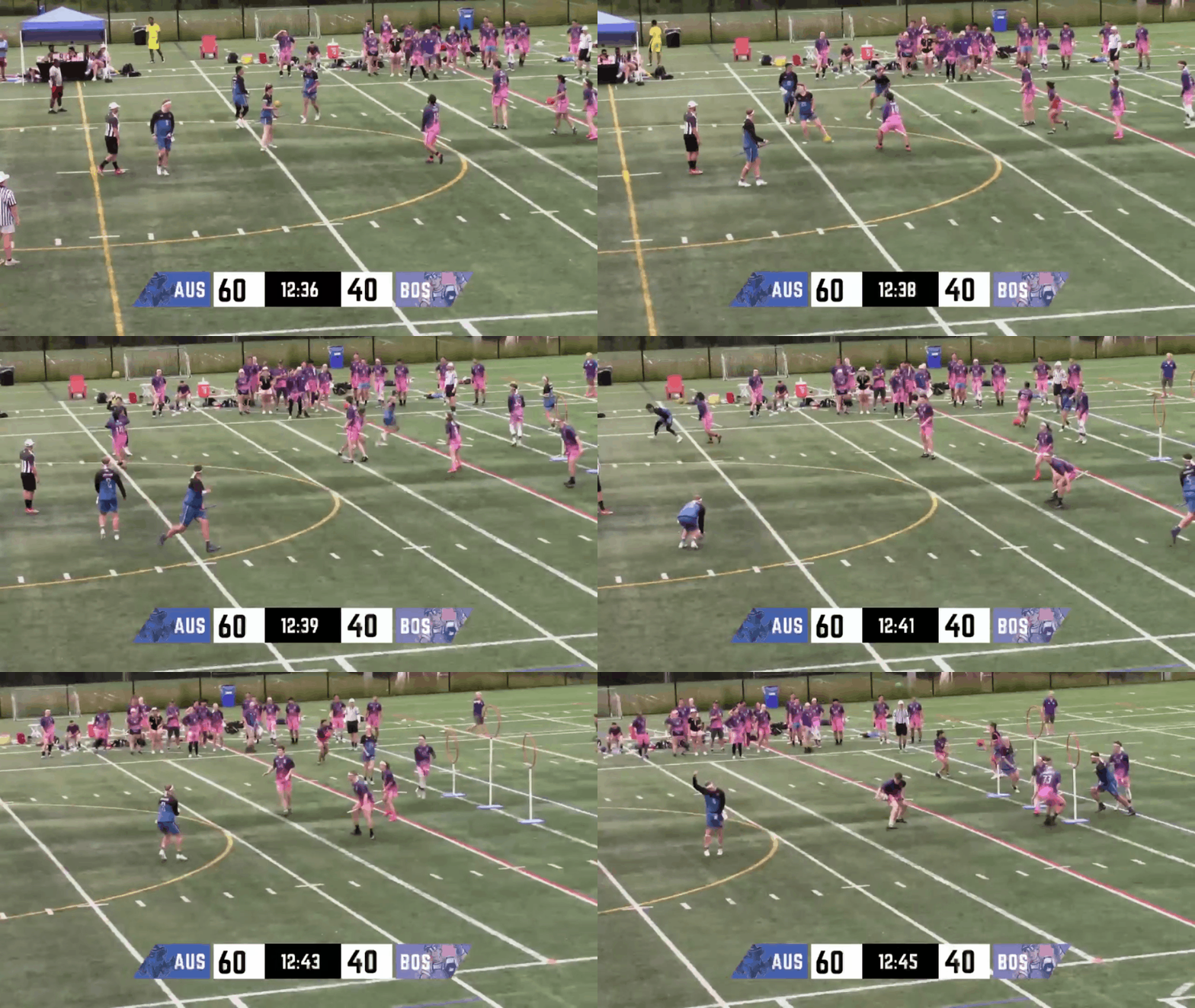
Havlin wins an exchange with Bevers and begins to press. Monroe is very obviously going to pass to Johnson the whole time. And when Johnson receives the pass, all four Forge defenders are still in the keeper zone. Compare this to the first example of an Austin press, which ends with Garza streaking across the field for a pick-six.
I’m confused. Didn’t Outlaws win by like 60 points total?
Yeah.
This all seems like it would result in a much worse deficit.
Yeah.
Beaters?
Beaters.
Chart?
Chart.
| Player | Game 1 Grade | Game 2 Grade | Total Grade |
| Ausra | 7 | -3 | 4 |
| Belitzky | -6 | -1 | -7 |
| Collier | -4 | -2 | -6 |
| Havlin | 26 | 14 | 40 |
| McCrady | 0 | 6 | 6 |
| Monteiro | -5 | -4 | -9 |
| W. Andrews | 0 | -3 | -3 |
| Xu | 4 | 21 | 25 |
| Total | 22 | 28 | 50 |
Xavlin!
Havlin and Xu remain really freaking good.
Some highlights?
Havlin first:
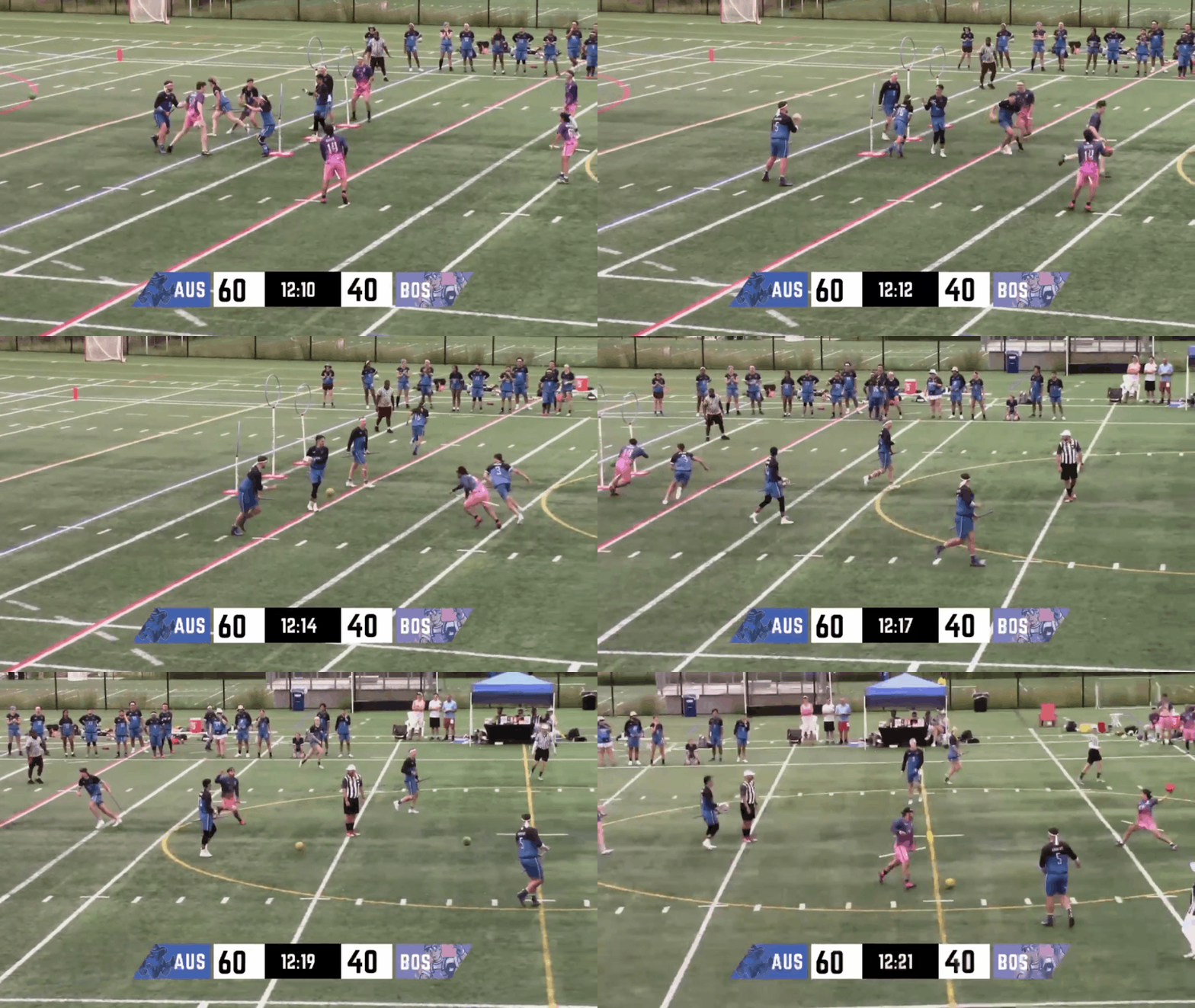
Havlin is fine in the half-court, but what make’s him so good (in addition to the arm) is his decision-making and creativeness in the open field. It’s very easy to just throw your bludger to hoops and get back on defense here, but instead, Havlin pumps and then throws his orange bludger back, grabs the yellow bludger, and then dodges the green one, turning one bludger into three.
In snitch-on-pitch, he’s especially dangerous.
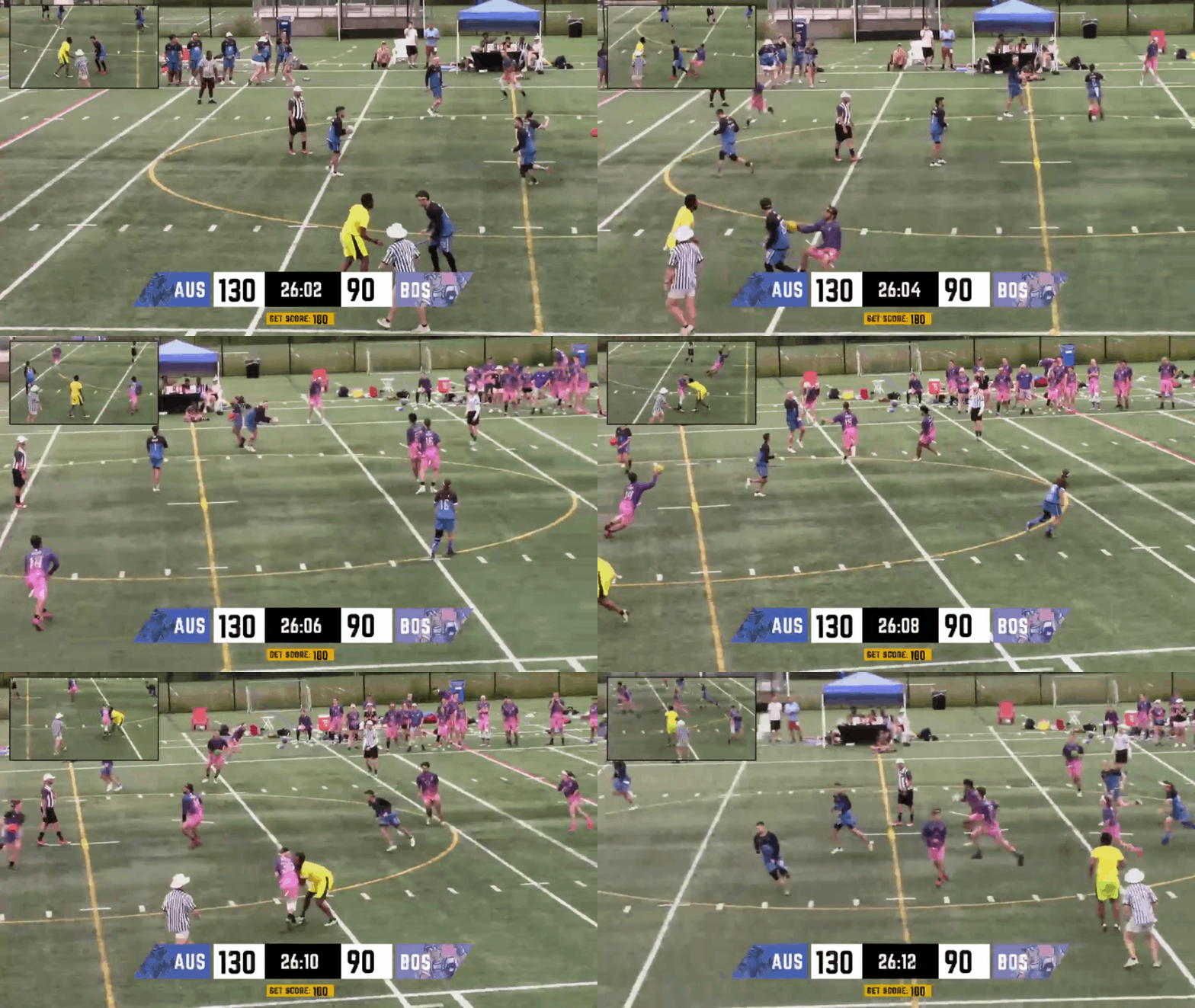
Havlin beats seeker, reads Johnson’s pass and beats Garza in the back, and then turns and beats Erwin to set up a prolonged no bludgers (the last throw was called beat). Do stuff like that a lot and you end up with a +40. More of the same:
And Xu?
Pretty slick play here to get a free no bludgers. I also love Monroe asking “to whomst?” but McBride is definitely behind hoops.
Xu’s +21 in game two is even more impressive than it looks on the chart: throughout the whole game she recorded a single negative grade, and it was a (-1). +22/-1 is a kind of insane performance, especially as a beater, as they tend to chart on most plays they’re in. Her single dropped play? The one time Forge tries to run mark.
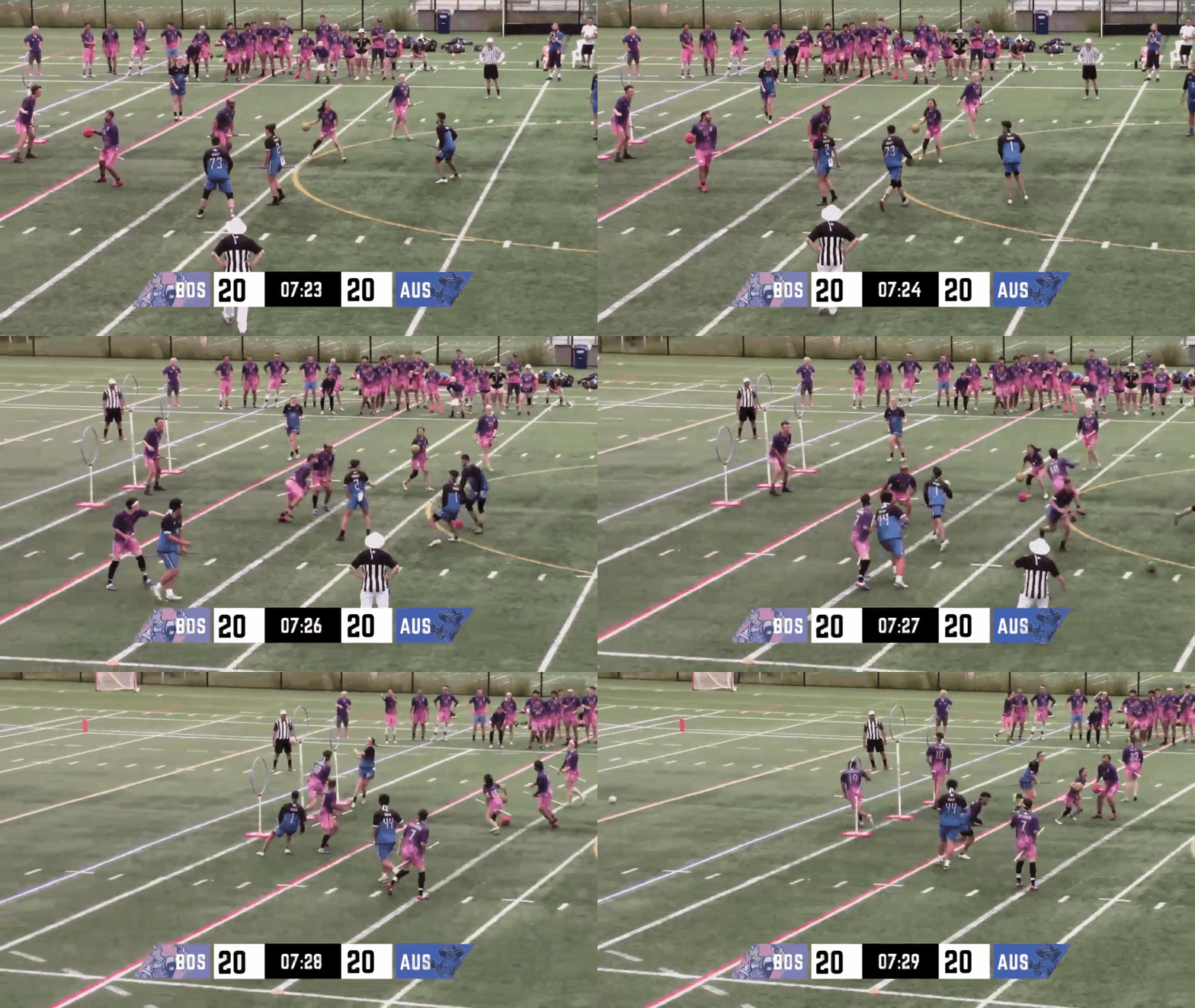
If you are going to run mark defense, you need a plan to defend against the unmarked chaser. Boston had no such plan. Xu gets dinged here for going after orange bludger instead of quaffle (and so does Havlin, for the throw), but if I could I would ding the coaching staff instead.
Other than that, perfect game two.
Xu was also, more than anyone else, a victim of her plays taking place offscreen. This is a constant complaint amongst beaters, and for good reason. As the sport continues to grow, I think it would be really valuable to think about how we can better ensure that all of the relevant action is getting captured on screen, whether its a wide-screen camera angles, separate beater cams, or something else. Too many plays I charted looked like this:
Xu (+1, offscreen) separates Tracy (-2, offscreen) from his bludger.
or this:
Havlin (+3, offscreen) and Xu (+3, offscreen) somehow take control from Wang (-3, offscreen) and Erwin (-3, offscreen).
But it wasn’t just Xu:
Erwin (+2) does something (cameras -1) to protect control.
And it wasn’t even just beaters!
Crawford (+2) and Pfenning (+2, offscreen) do something offscreen and score.
Are you really saying that MLQ should overhaul their production setup just to make your job as a sports blogger a little easier?
No… well yes? I don’t know, maybe? A very real and important part of our sport is beater battles that happen away from quaffle, and it’s too bad that none of them are ever on camera. Even if they don’t make it into the stream (ideally we would like, cut to the most recent important beater battle during a lull in quaffle play, replay style, but that’s definitely a ways away), some sort of B-tape that films the entire field would be nice. I’m not saying this needs to be the standard across the sport, but at MLQ Championships at least it seems like it’d be good to have.
It really just sounds like you just want to be able to be more thorough with your charting.
Yeah, maybe! Havlin (+3, offscreen) and Xu (+3, offscreen) somehow take control from Wang (-3, offscreen) and Erwin (-3, offscreen) hurts me to write lol.
Anyway, Xavlin?
The two of them graded at a combined 65, while the rest of the Forge beaters combined for -15, and the entire Outlaw corps combined for 30. Kind of nuts. Honestly, I’m somewhat surprised they didn’t play more. Beating is tiring, 100%, but also, 65 is a much larger number than -15! They don’t have to play the whole game, but it seemed like they weren’t on the field for much longer than any other other Boston beaters, which can’t be optimal. This is the MLQ Championship Series! Play your +40 and your +25 more!
McCrady was also solid, winning the brooms up races to ensure that Forge started with control in both games. Of course,
McCrady (+2, offscreen) steals the contested bludger from Wang (-2, offscreen)
one of them happened offscreen. The other one though:
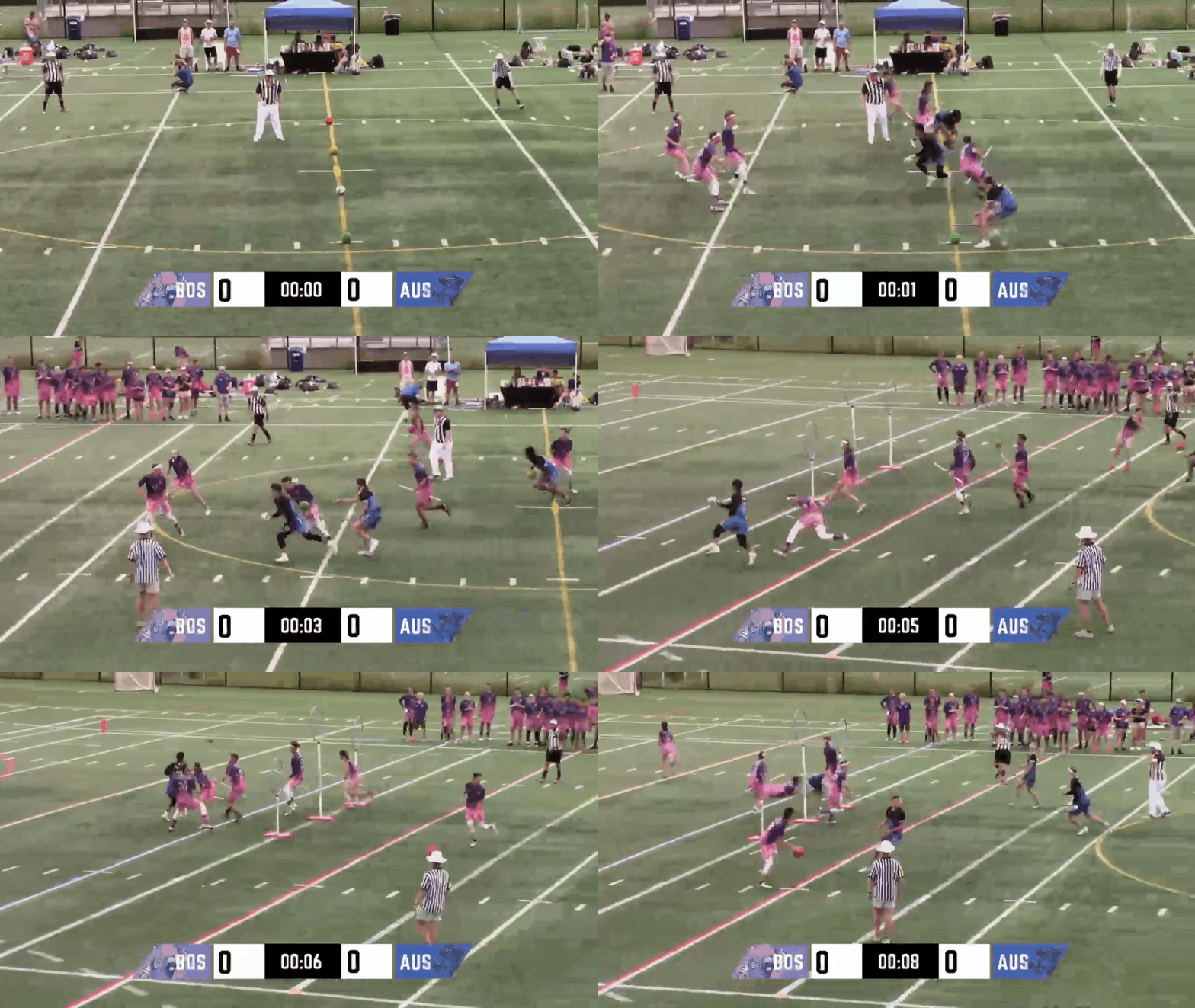
The rest of the Forge beaters were each plagued by issues of their own. Most of them showed flashes, but too often costly mistakes would end with goals against or bludger control lost. Belitzky got caught upfield too often without throwing back. Collier tried to 1.5 a few different times — none of them were successful. Monteiro took and lost too many exchanges.
Havlin and Xu should have been on the field longer.
And the Outlaw beaters?
Chart:
| Player | Game 1 Grade | Game 2 Grade | Total Grade |
| Bevers | 9 | -2 | 7 |
| Erwin | 1 | -3 | -2 |
| Ogilvie | 2 | 2 | 4 |
| Polzin | 5 | 6 | 11 |
| Tracy | 4 | 2 | 6 |
| Wang | 5 | -1 | 4 |
| Outlaws Total | 26 | 4 | 30 |
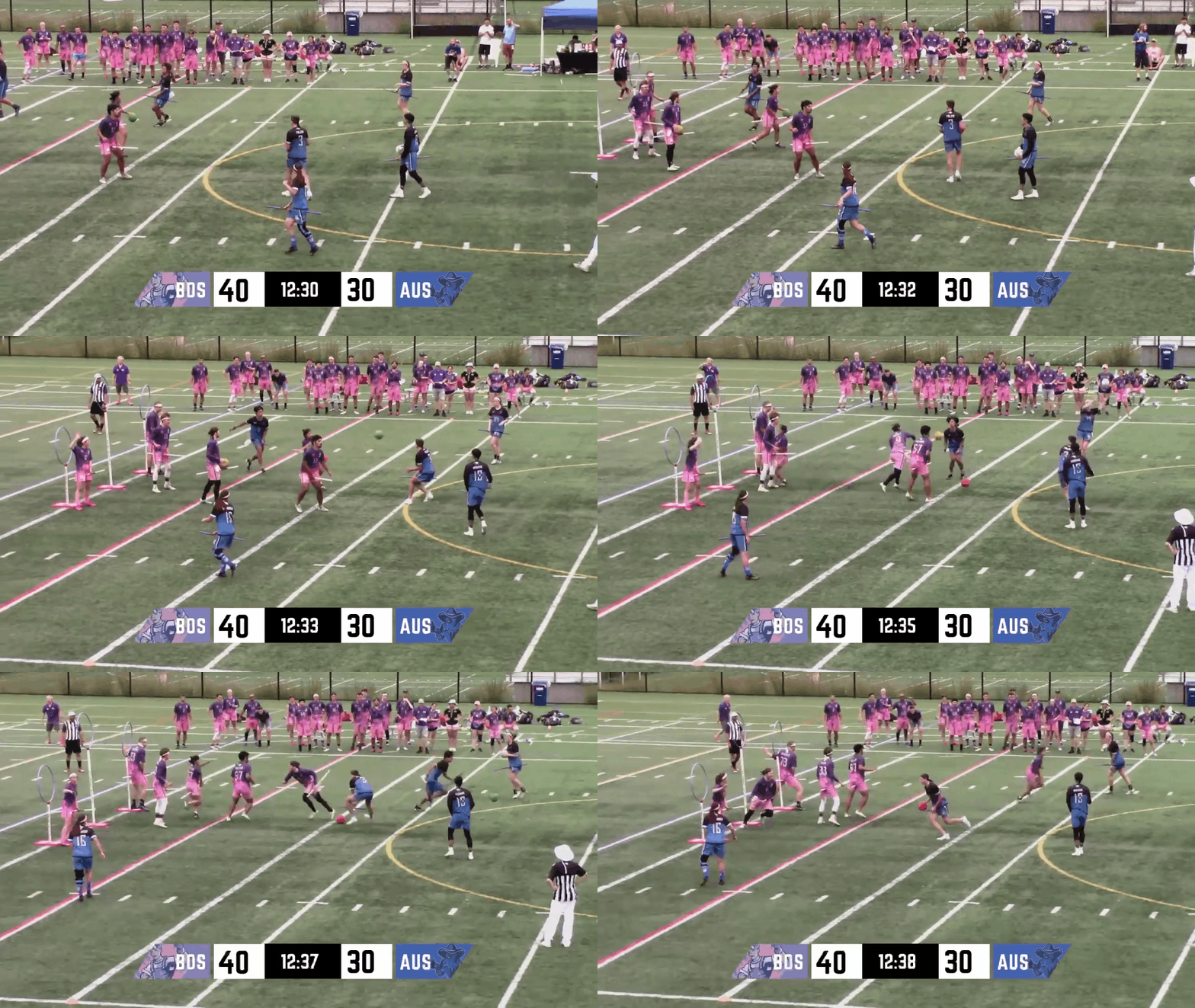
The Outlaw beaters held their own, for the most part winning against players not named Havlin and Xu. Polzin had a number of really nice catches that ended with Austin winning back control — here is one:
Bevers had quite possibly my favorite play of the entire series:
Unfortunately, it mostly happens in the SnitchCam, but she tackles Xu, and then, when Havlin comes over to beat her out, Bevers strips Havlin’s bludger from him while she’s still on the ground. The whole time staying engaged with Xu and then stealing her bludger before Polzin to come over and cleans up.
The rest of the beaters were all solid — Tracy had some really great plays but a lot of blunders as well, whereas Erwin, Wang, etc, were a lot calmer. Overall, the Outlaw beating corps held their own against Havlin and Xu enough for their quaffle players to take over the game, which is exactly what they needed to do.
Ultimately the difference in chasing play was larger than the difference in beating play, and so the Outlaws won the series in two games.
Is there anything you wanna say about the field lines?
Oh, wow, I thought you’d never ask! Field lines are a huge step up from cones, for sure. That said, next time, if there are going to be lots of lines on the field unrelated to our sport, then I would suggest we pick a color and paint all of our lines in that color. This play from game one turning out the way it did is a direct result of Xu not being able to quickly recognize which white line was keeper zone and which was meaningless.
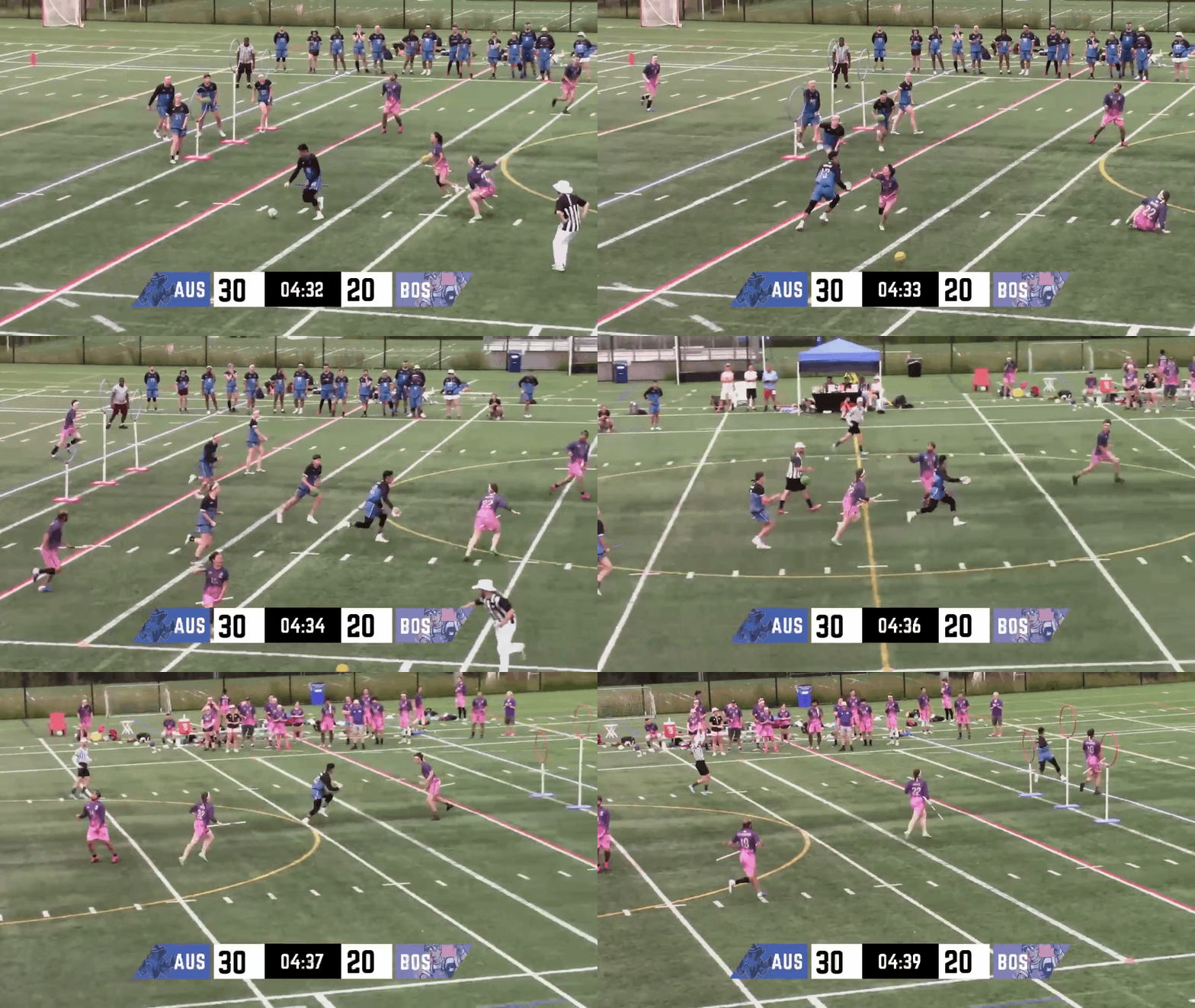
Make ’em all blue or all yellow or all red or something.
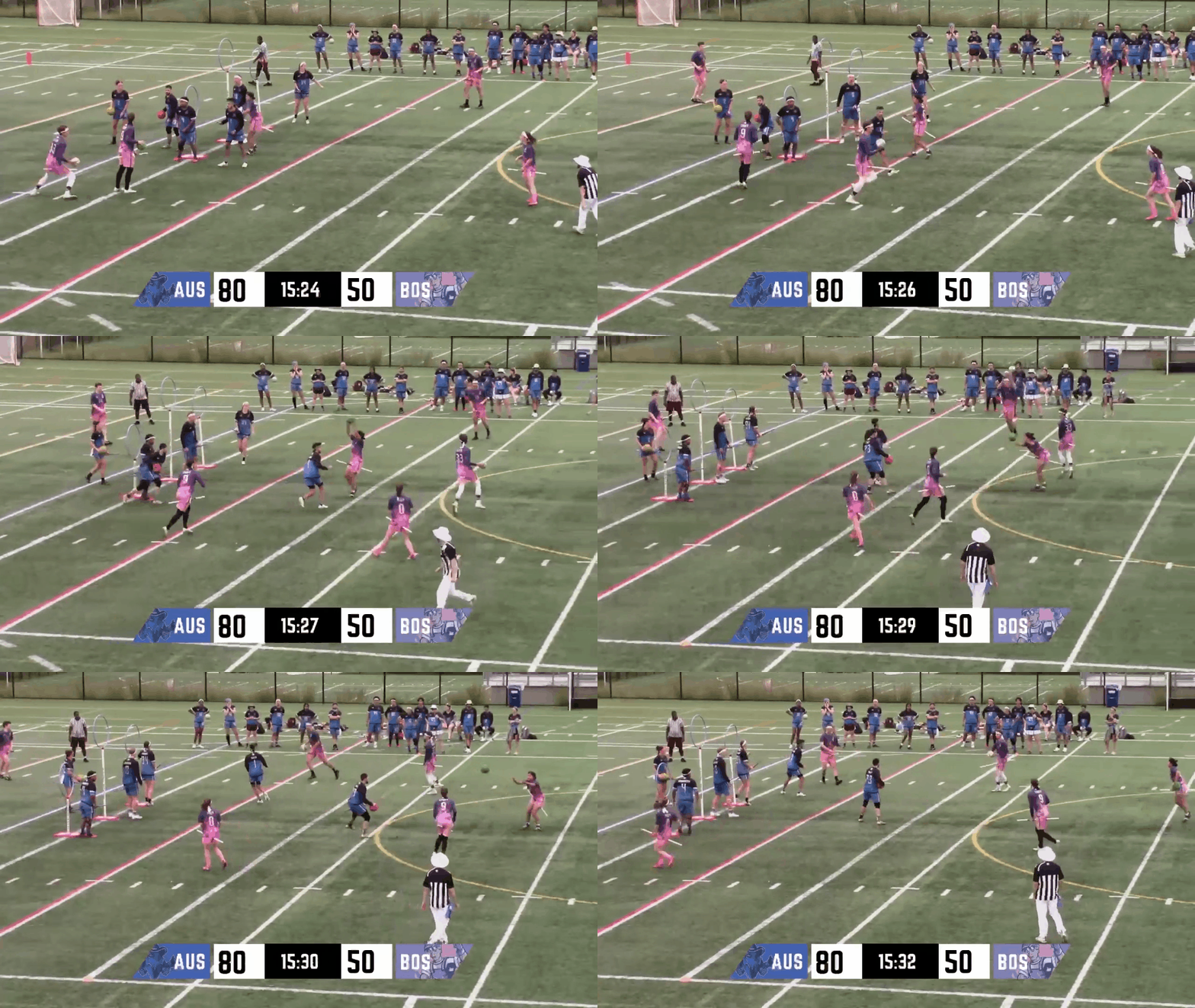
Got any fun GIFs that didn’t make it into the analysis?
You betcha!

Lastly, a few meta-things:
One, if there are plays or conclusions that you disagree with my gradings about, please please leave a comment! There’s still a ton about this sport that I don’t know, and I would love to know where I was wrong about a play so that I can do a better job on future QUESTs.
Second, I encourage other people to make more content! Shoutout to FastBreakNews on this front, and I would love to read more content from just about anyone. If you have thoughts about players, games, seasons, or the sport as a whole, consider this your call to write about them, whether they are short blurbs or insane projects like this one.
And finally, what game/series would you want me to QUEST next? The 2022 MLQ Championship Series was an obvious first one, but the second one is eluding me, so any ideas/requests are welcome, whether it’s USQ, MLQ, or IQA.


Leave a Reply